State News
Three House Democrats Broke Ranks on Michigan's FY2027 Budget — Their Concerns About Process and Policy
By Staff · July 17, 2026
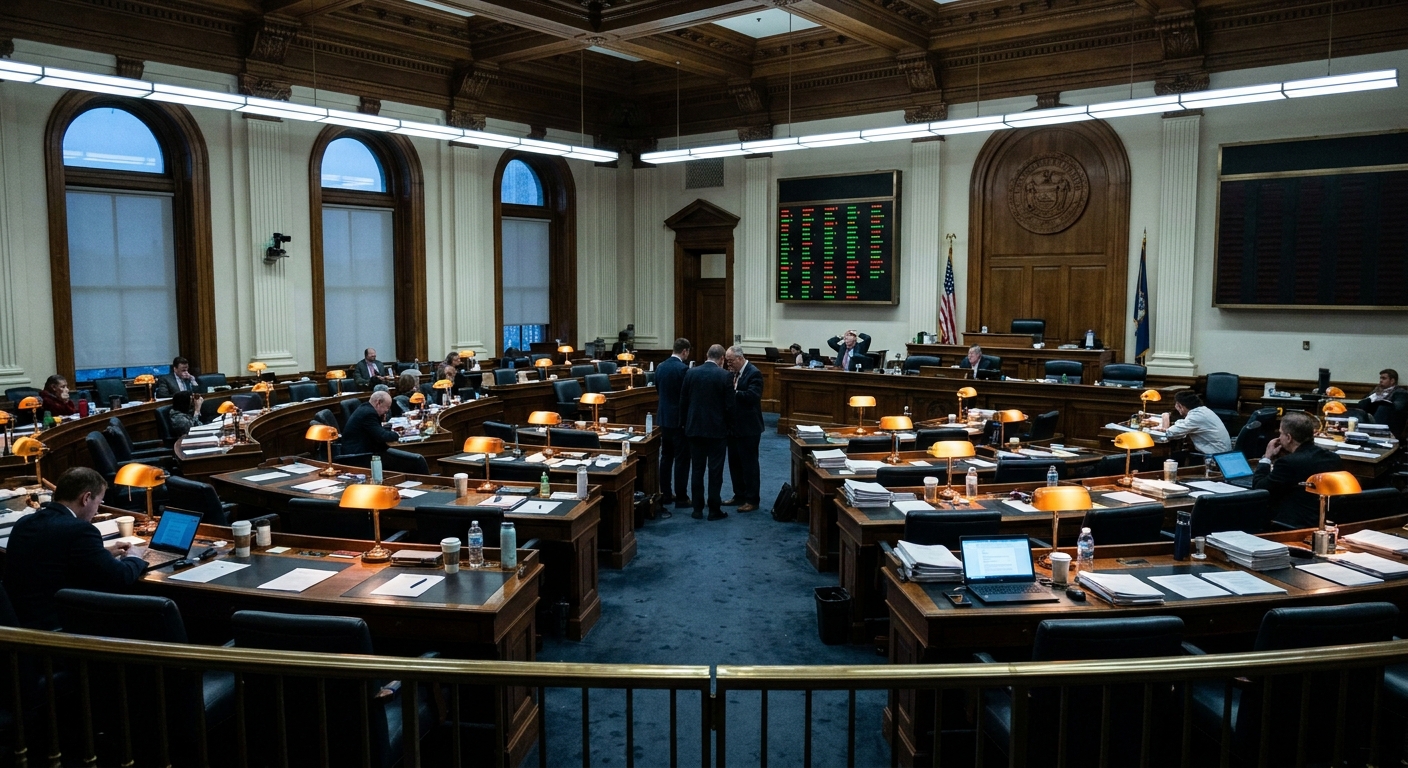
While Westland-area families and taxpayers slept through an all-night Lansing session, Michigan lawmakers approved a $75.2 billion FY2027 budget shortly before 9 a.m. Friday, July 3, 2026 — two days after the state's statutory deadline and marking the second consecutive year the Legislature has failed to meet it. The package totals $52.3 billion for general government and $22.9 billion for education, a reduction of $6.3 billion from the current year's $81.5 billion spending plan.
The budget controls funding that reaches local classrooms, school mental-health and safety programs, municipal aid and public-safety grants. But three House Democrats said the process — roughly 23 hours of continuous session — gave lawmakers too little time to read, question or revise the spending plan before voting, putting an unusual fracture inside the Democratic caucus on the state's biggest annual spending decision.
Dylan Wegela (D-Garden City) voted against both the general omnibus budget and the school aid budget; Regina Weiss (D-Oak Park) voted against both bills; and Veronica Paiz (D-Harper Woods) voted against the school aid budget only. The House passed the general omnibus budget 99-7 and the school aid budget 99-8.
Wegela represents Michigan's 26th House District, which includes Garden City and parts of Westland. "This is the worst budget that I have seen come through this chamber since I was elected," Dylan Wegela, State Representative (D-Garden City), said. Dylan Wegela, State Representative (D-Garden City), criticized the budget for shifting money from K-12 education to higher education, community colleges, and the state's general fund, stating that the budget process gets worse every year.
Regina Weiss, State Representative (D-Oak Park), said lawmakers received the final budget text "maybe an hour before we're voting on it". Weiss and her peers did not receive the standard briefing from the House Fiscal Agency where they could ask analysts questions about the budget. She voted no on the school aid budget because the final decisions and boilerplate were not available to lawmakers until after a conference report was adopted, leaving no opportunity to amend or fully review the package. Weiss warned that the school aid plan includes an additional $400 million diversion from the School Aid Fund to higher education and a $100 million increase in district payroll costs, which she views as a harmful shift of K-12 dollars to free up the general fund. Weiss has previously introduced a resolution to add penalties for failing to meet the July 1 budget deadline, arguing that missing the deadline for the second year is valid frustration among school groups.
Veronica Paiz did not respond to requests for comment explaining her vote against the school aid budget but reposted a video from Dylan Wegela in which he condemned the budget.
The budget includes a school aid fund of $19.8 billion, with the base per-pupil foundation allowance rising by $250 (2.5 percent) to $10,300. Wayne-Westland Community Schools enrollment for the 2025-2026 school year is approximately 9,452 students. The budget also allocates a record $1.7 billion from the School Aid Fund to higher education and community colleges, an increase of approximately $400 million from the previous year. That shift effectively replaces existing higher education appropriations from the General Fund, freeing up General Fund resources for non-education purposes. The budget includes $321 million for mental health and safety grants for school districts.
The City of Westland's FY2027 statutory revenue sharing allocation is $283,036, flat with its FY2026 allocation. Westland's total projected revenue sharing (Constitutional and Statutory/CVTRS) for FY2027 is $10,728,572, compared to $10,445,555 in FY2026. Statutory revenue sharing for counties, cities, villages, and townships is held roughly flat at FY2026 levels, and public safety revenue sharing grants total $50 million. County revenue sharing remains at approximately $291 million under the same distribution formula as FY2026, with counties receiving public safety revenue sharing at current levels of $11.7 million. The Michigan Association of Counties noted that despite a budget shortfall exceeding $1 billion, statutory revenue sharing for local governments was held flat.
Peter Herzberg, a Democrat from Westland, serves as the state representative for Michigan's 25th House District, which includes all of Wayne and most of Westland. Representative Peter Herzberg (D-25th District) voted in favor of the general omnibus budget on July 3, 2026.