State News
GOP Governor Candidates Clash Over Cost of Living, Taxes, and Data Centers in Back-to-Back Debates
By Staff · July 17, 2026
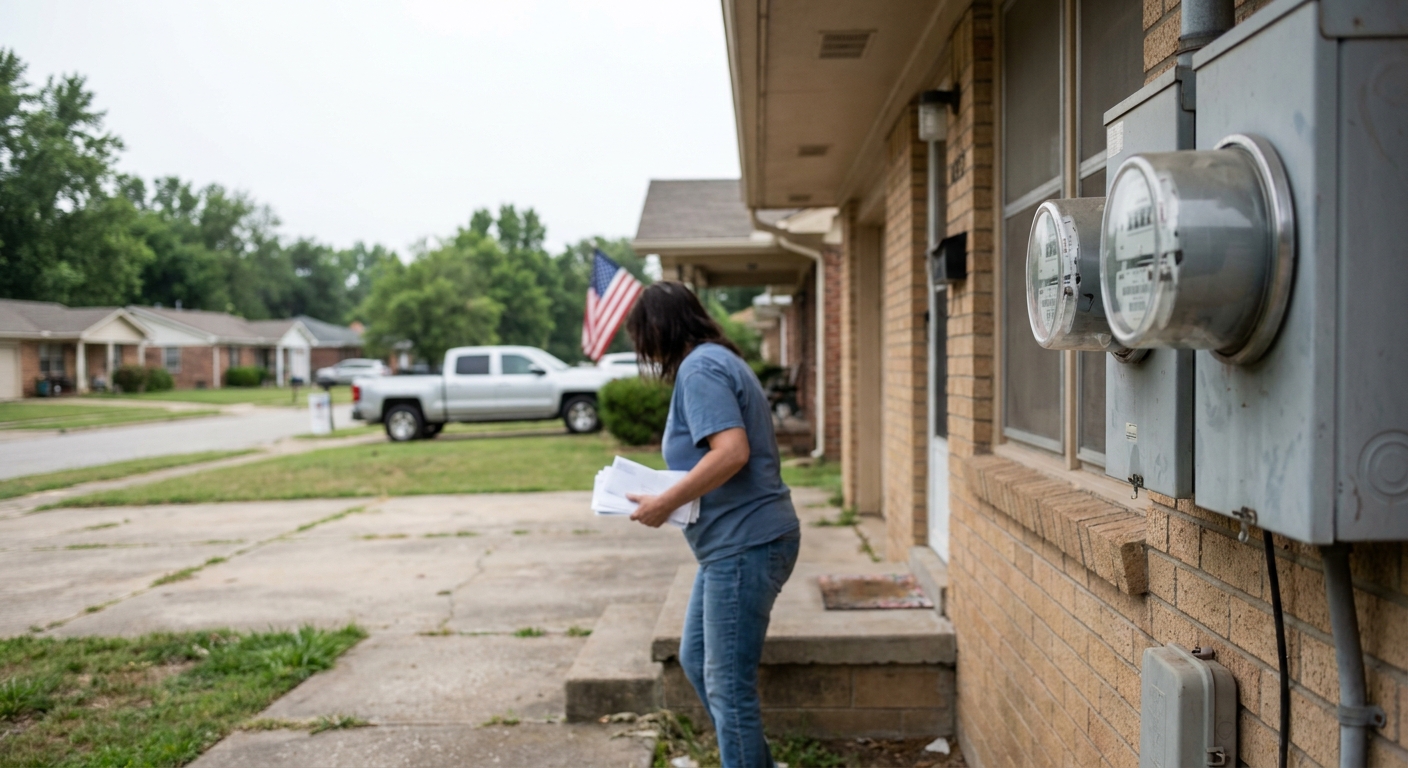
For Westland households watching income-tax bills, property taxes and utility costs, the Republican race for governor is increasingly a debate over who would pay less — and what public services or investments could be affected. Across back-to-back debate nights, all three GOP candidates said Michigan's cost of living is too high, but they offered sharply different paths involving state spending, corporate incentives, utility rules and data-center development.
The field includes U.S. Rep. John James (R-MI 10), widely seen as the Republican frontrunner; businessman Perry Johnson; and former Attorney General Mike Cox, who held that office from 2003 to 2011. FOX 2 hosted the first debate in Detroit on July 8, followed by a WOOD-TV debate in Grand Rapids on July 9. Michigan's Republican primary is scheduled for August 4. Cox and Johnson repeatedly targeted James, interrupting the frontrunner and challenging his integrity and honesty as they tried to define the congressman before primary voters do.
At the center of the economic debate is Michigan's 4.25% state income tax, which brought in about $13.5 billion last fiscal year. All three candidates have made eliminating or sharply cutting it a core part of their affordability pitch. Cox and Johnson favor repealing it altogether.
"I agree with Perry Johnson that we need to get rid of the income tax," Mike Cox, the former attorney general, said. Cox says Michigan could afford repeal by ending corporate subsidies and reducing government spending.
Johnson argued that cuts to state spending could also lead to property-tax changes. "Keep in mind that if we go and reduce our expenses for the government, we're in a position to not only eliminate the income tax but reform the property tax," Perry Johnson, the businessman, said. Johnson's property-tax proposal carries obvious appeal for Westland homeowners coping with rising bills, but he has not said how much relief his plan would deliver or how communities would replace funding for local services supported by property taxes.
"The major problem we have right now is the fact that we're giving too much money away to the government to throw away," Perry Johnson said. "That's our biggest issue."
James is pitching a narrower first move: a 20% to 25% income-tax cut in his first year, paid for with roughly $3 billion in cuts to pet projects, fraud and unspent general funds. He has framed that approach as a way to provide tax relief while protecting roads, Medicaid and other core services — a direct contrast with the immediate repeal sought by Cox and Johnson.
"We're talking about affordability, we're talking about things like protecting health care, patients over price tags, protecting Medicaid, making sure that we're doing more to protect — invest in mental health issues," John James, the U.S. representative, said.
Eliminating the income tax entirely would require major spending cuts or replacement revenue. Budget experts have warned that such a rollback would likely force significant reductions in state spending. James has identified funding for a smaller opening cut and says essential services can remain intact. Cox and Johnson are asking voters to accept a much larger rollback on the belief that spending cuts and subsidy reductions can cover the loss.
The disagreement over data centers is another version of the same fight: whether Michigan should pursue new investment aggressively or pause to protect residents from possible costs. Johnson supports a one-year moratorium while the state studies the effects of the projects, seeking greater transparency and safeguards against higher energy rates in nearby communities.
"We don't know the damage," Perry Johnson, the businessman, said.
James would allow development with local control, water protections, pollution prevention and measures meant to keep electric bills from rising, favoring data centers on blighted and brownfield sites instead of productive farmland. Cox also supports giving local governments final say over locations, while requiring developers to pay for new electrical infrastructure and meet environmental standards.
The Michigan Public Service Commission has approved Consumers Energy tariffs designed to make data centers pay the full cost of new generation and grid upgrades. Environmental and ratepayer groups warn that without strict enforcement, household electric bills and clean energy goals could still be jeopardized.
James's broader affordability agenda combines tax and spending cuts with proposals involving health care, housing and energy. Cox and James both support repealing Michigan's requirement for a 100% clean-energy standard by 2040, arguing that repeal would reduce utility bills. Both also want to overhaul or challenge the Public Service Commission as a way to lower energy and health-care costs, and both support more health-care price transparency and limits on hospital consolidation. James's housing plan focuses on cutting federal red tape and green building codes rather than providing down-payment assistance. All three candidates criticized Michigan's regulatory climate as an obstacle to housing construction and business growth.
Johnson has repeatedly called for a sweeping MEGA audit of state government to find savings and spur economic growth. Cox put his argument more simply: "I'm willing to work with anybody around the state... to cut fraud, waste and abuse, and put more money in your pocket," Mike Cox said.
For western Wayne County households, the choice is not between candidates who promise lower costs — each does. The choice is between James's partial income-tax cut, tied to targeted reductions and a pledge to protect major services, and the full repeal backed by Cox and Johnson, who say Michigan can cut spending deeply enough to sustain it. Any savings would depend on whether the state can fund the cut without reducing services that residents rely on. Their data-center positions would help determine how much control local communities retain — and whether developers or utility customers pay for the infrastructure required to serve the projects.
GOP voters heading to the August 4 primary will need to evaluate which candidate's economic plan is most credible for delivering measurable cost relief to Michigan families.