Government
Westland candidates on the ballot: What their platforms mean for your community
With no city races on the Aug. 4 primary ballot, Westland voters' influence over local hiring standards, wage requirements and neighborhood infrastructure spending rests on county and state contests
By Staff · August 6, 2026
Who benefits when Westland spends public money on roads, redevelopment and city contracts is on the ballot Nov. 3. Voters will choose City Council members, Wayne County commissioners, Michigan House representatives and a U.S. House member, after the Aug. 4 city primary narrowed the City Council field. Emily Bauman, Antoinette Martin, John Sullivan and Lekisha Maxwell advanced in the City Council race.
Council members steer development contracts and infrastructure budgets — decisions that can determine whether city-funded projects enforce local-hiring and prevailing-wage requirements or send public dollars elsewhere. The central question for working-class voters is which candidates have shown, or credibly committed to, keeping those jobs, contracts and public investments in the community.
Bauman is running for re-election, and her campaign emphasizes an economy focused on workers and businesses, along with health and safety, which she describes in terms of justice and liberty.
Maxwell, a 15-year Westland resident, served as vice president of the Westland Housing Commission and on the Economic Development Commission and has worked with the Western Wayne NAACP and the Westland Norwayne Community Citizens' Council. Her platform calls for economic development, job training for youth and young adults, support for veterans and their families, and better community engagement.
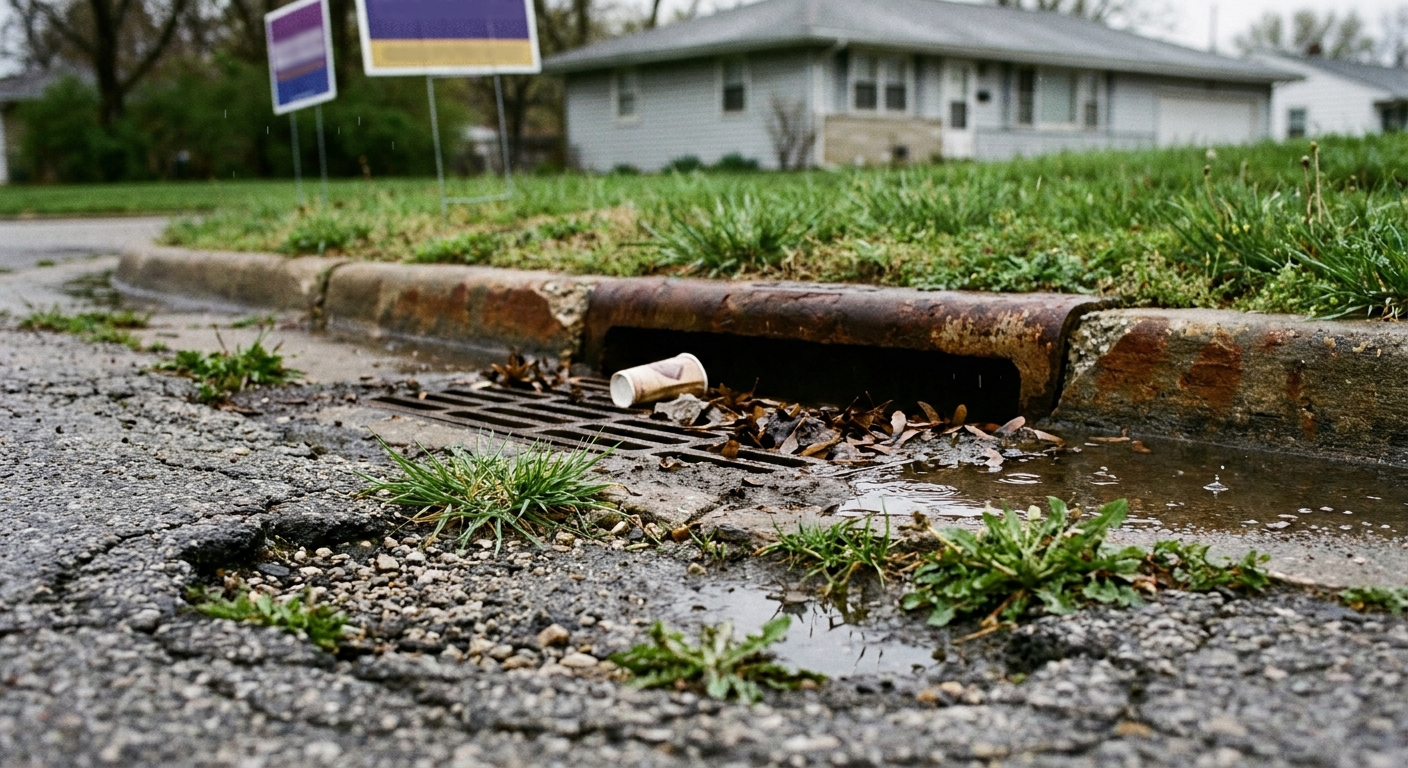
Sullivan is campaigning on downtown and mall redevelopment, small-business support, infrastructure investment and fiscal responsibility. His platform calls for repaving roads, upgrading water and sewer systems, fixing sidewalks and improving pedestrian safety, as well as investing in parks and recreation, green initiatives and grid reliability. He also supports strong funding for police and fire.
Those proposals would unfold alongside Mayor Kevin Coleman's agenda. Coleman's platform emphasizes keeping taxes low while delivering public safety, economic development and infrastructure improvements, including road and bridge work, flood mitigation and expanded recycling. His stated priorities also include hiring more police officers and firefighters, upgrading public-safety facilities and linking high school graduates with trade schools. His 2026 agenda includes exploring the purchase of the Westland Shopping Center and considering a recreational complex along Ford Road.
County decisions present another test. Westland is divided between Wayne County Commission Districts 11 and 12, whose commissioners weigh in on county spending, road funding and whether regional projects serve Westland neighborhoods or pass them by.
Glenn Anderson is the incumbent in District 12, which includes parts of Westland. He has served since being appointed in 2016 and subsequently elected, and he defeated Allen Downer in the 2024 Democratic primary.
Allen Wilson is the incumbent in District 11, which includes Belleville, Flat Rock, Romulus, Wayne, Huron Township, Sumpter Township and Van Buren Township, along with parts of Westland. Wilson won the seat in 2024, succeeding Al Haidous, who did not seek reelection. Democratic primary candidates in District 11 include Joseph Michael Hunt and Alysha Johnson, while Republican Johnnie S. Townsend is also on the ballot.
Hunt has offered some of the county field's most specific labor and accountability proposals: supporting unionization of service-industry workers, requiring disclosure of outsourced human-resources functions on job sites, eliminating 90-day probation periods before health benefits begin statewide, reducing debt-interest burdens to achieve a living wage and preventing triple dipping. The broader issue for Westland families is whether county officials will fight for the city's share of road and infrastructure money when other communities are pressing their own demands.
Most of Westland falls within Michigan House District 25, while parts are in District 26. Those lawmakers shape school funding, infrastructure allocations and labor protections that affect working families.
Democratic incumbent Peter Herzberg represents District 25, which includes Westland and parts of Wayne, Canton and Dearborn Heights. He faces Republican Dawn Udell in the general election. Herzberg has received the Michigan AFL-CIO endorsement.
Dylan Wegela is the District 26 incumbent. His district includes Garden City and nearby parts of Westland, Inkster and Romulus, and he ran unopposed in the 2026 primary. Wegela serves on the House Labor Committee, and his legislative priorities include labor and union protections, infrastructure, education and health care. He introduced House Bills 6056-57 on workplace seating rights and protected labor actions, as well as House Bill 4424 to eliminate the remaining Inkster school debt. Those records give voters a clearer basis for assessing how the state candidates would approach workplace protections, school resources and the labor standards that shape what local jobs pay.
At the federal level, Westland sits in Michigan's 12th Congressional District. Rashida Tlaib won the Aug. 4 Democratic primary with 67.7 percent of the vote, defeating Shanelle Jackson at 24.3 percent and Byron H. Nolen at 7.9 percent. James Hooper ran unopposed in the Republican primary.
Tlaib's campaign says her advocacy led to billions in federal support for water affordability, lead-service-line replacement and local infrastructure projects, and that she secured more than $68 million in direct federal funding for local communities. She co-launched the People's Housing Platform, which describes housing as a fundamental human right and calls for robust federal investment in housing stock.
Hooper's platform emphasizes pro-life policy from conception to natural death, Second Amendment rights that he describes as non-negotiable, parental rights in education, eliminating the U.S. Department of Education, bodily sovereignty and lower taxes through fiscal responsibility.
Across the ballot, voters have different kinds of evidence to weigh. Herzberg and Wegela offer labor endorsements, committee assignments and legislation. Tlaib points to a federal funding record. The county races feature Hunt's labor and disclosure proposals alongside incumbents Anderson and Wilson. At the city level, however, the ballot offers economic-development experience and infrastructure platforms but limited public documentation of candidates fighting over how city and county money is spent, whether fair wages are enforced and who gets hired. For Westland voters deciding who will keep development dollars and public investment in the community, the choice rests on whether platform commitments are specific enough to hold the winners accountable once spending decisions are on the table.